
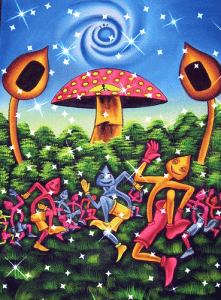
 The most commonly used hallucinogens are LSD, MDMA (ecstasy) and PCP. In general, they are used to alter perceptions. Many religious customs involve the use of hallucinogens such as psilocybin and mescaline (peyote) to achieve a higher consciousness or communicate with the spirit world.
LSD (Lysergic acid diethylamide) causes dilated pupils; rapid heart rate; weak muscles; nausea; lack of coordination; sweating; increased blood pressure, temperature and salivation; impaired short term memory; euphoria; higher response to stimuli; hallucinations; mixing of perceptions from sight to sound to smell; perceived increase in creativity and knowledge; fantasy; emotional volatility; subjective slowing of time; loss of boundaries; confusion; loss of judgement; flashbacks; a ‘Bad Trip’; possible brain damage and neurological dysfunction. Use over time may result in permanent psychotic episode.
PCP (Phencyclidine) is known to cause staggering; exaggerated eye movement; slurred speech; numbness; increased heart rate and blood pressure; sweating; excessive saliva; double vision; dizziness; nausea; seizure; coma; euphoria; hallucinations; reduced pain sense; feeling stronger or invincible; disorganized thoughts; anxiety; confusion; paranoia; hostility; amnesia and feeling homicidal or suicidal. Sustained use may result in neuron degeneration in limbic system; social isolation; episodes of extreme anxiety or agitation and speech and cognitive dysfunction up to one year. Further use may cause psychosis in those with schizophrenia, social isolation, episodes of extreme anxiety or agitation.
MDMA (3,4-Methylenedioxymethamphetamine ) is also known as ecstasy. Use results in disorientation; anxiety; tachycardia; tingling sensations and jerks; relaxation; extreme euphoria; emotional insight; headache; seizure; clenched jaws; dry mouth; nausea; dilated pupils; dry eyes; elevated body temp; dehydration; sweating; insomnia; muscle pain; intense euphoria; increase in emotion; reduced inhibitions; hallucinations; decreased pain sense; liver damage; increased sexual pleasure; panic attacks and paranoid psychosis. In addition, MDMA destroys axons and terminals for serotonin, dopamine and norepinephrine. Over time, decreased blood flow to parts of brain can cause Parkinson’s like symptoms. Some research indicates long-term psychotic states for people susceptible to mental illness.
Less commonly used hallucinogens such as mescaline (peyote), psilocybin, DMT, nutmeg, atropine and scopolamine are most commonly used in religious rituals. These hallucinogens, aside from the impact of achieving an altered state of consciousness, have similar side effects as other hallucinogens.
https://www.drugabuse.gov/publications/drugfacts/hallucinogens